Summer School 2026 - How to apply and What you will learn
The deadline for application to the InterPARES Summer School is fast approaching. Here is the call for applications with the detailed program.
InterPARES Summer School 2026
June 22-26, 2026 -- Call for applications
The InterPARES Trust AI project, the Italian Ministry of Culture - Soprintendenza archivistica e bibliografica delle Marche, the University of Macerata and the Municipality of San Benedetto del Tronto are pleased to announce that they are now accepting applications for the 2026 InterPARES Summer School.
The aim of the International InterPARES 2026 Summer School is to offer a unique opportunity for records managers and archivists to catch up on emerging theories, methods, practices and technologies for trustworthy records and archives and on the outcomes of the most innovative research in the sector. The instructors will all be InterPARES researchers from various countries.
Participation in the 2026 edition is free. The travel, accommodation and living expenses are the participants’ responsibility. The Summer School will take place in San Benedetto del Tronto (AP), a renowned holiday destination in the Marche region of Italy (see: https://en.wikipedia.org/wiki/San_Benedetto_del_Tronto), in the Auditorium Comunale <<Tebaldini>>, Viale A. De Gasperi 124.
The program is organized into four days of learning modules, taught in English, from Monday, June 22nd to Thursday, June 25th, and a one day Symposium, on Friday, June 26th.
Admission requirements and instructions:
Send a letter of application with your detailed CV to sab-mar@cultura.gov.it by January 31, 2026
● Admission requirements: The admission requirements for professionals consist of English fluency, a Master’s degree or equivalent, and a few years of professional work in either an archival institution or in an organization as a record manager or archivist, or exercising functions related to records and archives management.
● The selection of the applicants will be carried out by an Admission Committee composed of the representatives of the above organizing bodies, chaired by Prof. Luciana Duranti.
● The applicants will be informed of the outcome of their application on or before February 28, 2026.
Program
The InterPARES Summer School program is designed to present the most significant findings of 25 years of research about trustworthy digital records creation, maintenance, preservation, use, and access across technologies, discussing both theory and best practice for digital records and archives management. Professional archivists will come in contact with the latest developments in archival science and the use of artificial intelligence in archival science.
Day 1 – Monday, 22 June
8:30 Registration
9:15-10:30 Welcome and Introductions
Welcome from government officials and the School’s organisers; students’ introductions; logistic details.
10:30-11:00 Coffee Break
11:00-12:15 Luciana Duranti, Authentic Digital Records
InterPARES tested the traditional concept of record in the digital environment, determining the characteristics of digital records as well as their necessary and sufficient attributes. This class will discuss the findings of InterPARES with respect to the nature of digital records, how to maintain their authenticity and how to ensure that it will be verifiable over time.
12:15-13:45 - Lunch
13:45-15:00 Hrvoje Stančić, Technological Authentication
The digital era brought new challenges to the archives. The underlying archival theory and concepts are the same for analogue and digital records. However, the technical manifestation of digital records, their variety, speed of creation, volume, and volatility require new computational approaches, especially regarding record authentication. Digital signatures bring another layer of complexity to the long-term preservation of digital records, because the certificates they rely upon expire much sooner than the records’ retention period. Blockchain and distributed ledger technologies (DLT) can support records’ integrity, confirm their sequence, enhance non-repudiation, but also help preserve the validity of digital signatures. This class will present the TrustChain model, resulting from the InterPARES Trust project research, together with the use case of a system for authenticating analogue university diplomas by connection to the blockchain.
15:00-15:30 Break
15:30-16:45 Jim Suderman, Privacy and Ethics in the Era of Artificial Intelligence (AI)
This class will peek behind the curtain of AI tools and techniques and their potential application in the archival field. These tools provide incredible possibilities to enhance appraisal, description and access to archival holdings, but their strengths and limitations must be understood in terms of how and why they were developed, so as to mitigate the risk of undermining the fundamental values that drive archival work. Similarly, responsibly providing records for transformation into data to train AI models requires archivists to consider how this might affect the individuals identified in such records. This session will reflect on ethical principles from both the archival and AI communities and share practical experience gained within an InterPARES Trust AI study, especially with regard to privacy protection.
Day 2 – Tuesday, 23 June
9:15-10:30 Corinne Rogers, Trustworthy Digital Preservation
What is required to preserve trustworthy digital records over time and through technological change? This is a question that InterPARES has addressed from the beginning. The first two InterPARES projects formulated and elaborated the concept of the chain of preservation, providing a basis for judging the trustworthiness of records’ preservation. This class will examine the functional and data requirements for digital preservation as derived from the Chain of Preservation Model (COP), and, under the rubric of Preservation as a Service for Trust (PaaST), will outline a comprehensive model developed by the 4th phase of InterPARES (InterPARES Trust) for integrating what is required in digital preservation with technical approaches for meeting such requirements in the cloud.
10:30-11:00 Break
11:00-12:15 Erik Borglund, Records in the Cloud
Modern cloud service as we see it today was established by Amazon in 2002, when it was used as an internal service. In 2006, Amazon offered the service outside the company. The cloud as a technology and the related service providers have been a challenge for records and archives professionals, and others. The focus of this class is on the findings of InterPARES Trust, “Records in the Cloud”, but it will also discuss the cloud technology challenges that one can encounter today.
12:15-13:45 Lunch
13:45-15:00 Joe Tennis, Records Metadata
InterPARES has established Benchmark and Baseline requirements for keeping and preserving authentic records in digital systems. These, along with the Chain of Preservation Model, have been used to create the InterPARES Authenticity Metadata (IPAM). This class will present these findings from InterPARES and discuss their relevance in the emerging technological environment.
15:00-15:30 Break
15:30-16:45 Scott Cameron, The Role of Paradata in Ensuring Trust in the Use of Artificial Intelligence (AI) Systems plus symposium
Day 3 - Wednesday, 24 June
9:15-10:15 Jessica Bushey, Metadata and Images Collections
In this class participants will learn about managing and preserving aggregations of digital images, based on InterPARES research into digital image creation and recordkeeping practices. The role of metadata to capture information contributing to the trustworthiness of an image will be explored, along with standards and best practices for metadata and image formats for access and preservation. The class will end with an exploratory discussion about the opportunities and potential challenges of Artificial Intelligence (AI) in the context of images.
10:15-10:45 Hrvoje Stančić, Computer Vision and Digitized Images Collections
10:45-11:15 Break
11:15-12:15 Peter Sullivan, Artificial Intelligence (AI) I tools for Audio Visual Archives
To make audiovisual materials available to the public can often be challenging for archival institutions. Accessibility laws for instance may require subtitles or audio descriptions for material that is published online, and this may be laborious to produce by hand. Finding the needed records may also be challenging, as item-level metadata are required to search through an institution-run web portal. As part of InterPARES Trust AI work, we’ve looked deeply at how AI tools may play a role in addressing these challenges. AI may be a suitable tool for generating first-draft transcriptions of audio recordings, identifying the language or dialect of a spoken audio file, as well as improving existing metadata to aid in search engine discovery. This class will look at the ecosystem of tools that are now available, contextualize their proper use, and draw lines around existing gaps in their application.
12:15-13:45 Lunch
13:45-16:45 Emanuele Frontoni, and Alessandro Cacciatore - half a day - workshop with a half hour break
Day 4 - Thursday, 25 June
9:15 – 10:30 Victoria Lemieux, Clio-X: Ethical Artificial Intelligence (AI) Compute On Demand for Archivists and Researchers
This class will present a demonstration of Clio-X a Web3 data space that offers a novel decentralized and ethical AI-enabled reference and access solution for archives and researchers. Clio-X was developed because archival institutions have many archival documents of a sensitive or high-risk nature and growing researcher requests for access and analysis of these documents using AI. Clio-X addresses this demand by: (1) allowing archives to make archival datasets available to run a variety of AI-enabled computations on demand (e.g., exploratory data analysis, clustering, topic modelling, sentiment analysis, handwriting recognition and sound recording transcription) and (2) enabling AI-enabled access and compute in such a way that the data never leaves the custody and control of the archives but is still able to return aggregated output results to researchers in the form of statistics, conversational search output or data visualizations. Datasets are identified by unique identifiers called DIDs, which are like URIs but can also be used to cryptographically verify the identity and integrity of a dataset.
10:30-11:00 Break
11:00-12:15 Tracey P. Lauriault, Data as artifacts and as records. This class will present the relationship between metrology and data, and discuss how to consider data beyond normalized technological understandings. Examples will be drawn from the InterPARES 2 General Studies about the concepts of reliability, accuracy and authenticity in the sciences, and from the InterPARES Trust AI case studies about digital twins and smart grids. The class will end with a discussion of the relationship between data and records.
12:15-13:45 Lunch
13:45-15:00 Pierluigi Feliciati, Trusted and easy access to records and archives
This class will present and discuss the InterPARES main concepts and issues related to archival reference and access. It will focus on access as presented in the main archival conceptual models and standards, on the role of records managers and archivists in mediating between authentic records and users in digital environments, and on how the related activities could be successfully managed. One of the topics will be a user-centred approach in the phases of conception and development of reference and access services, considering the organization of user studies to conceive, build and maintain good archival digital services. Part of the class will be discussing and evaluating some archival access services to better focus on the notion of “quality” and the primary metrics for its evaluation.
15:00-15:30 Break
15:30-16:45 Darra Hoffman, Laws and Regulations Concerning Artificial Intelligence (AI)
With the recent passage of the Artificial Intelligence (AI) Act, the European Union has established a regulatory framework governing the development and use of AI within the EU. A primary goal of the AI Act is to ensure that AI systems are used in ways aligned with EU values, including transparency, accountability, privacy and human rights. While the AI Act does not expressly address the use of AI in the records and archival management context, key aspects of the Act have applicability to how records are described, classified, managed, retained, and accessed by the public. This class will discuss examples of how the AI Act may influence the use of AI in performing records and archival management functions in the future. It will also look at how the AI Act intersects with the EU’s General Data Protection Regulation on matters governing sensitive personal information in records repositories. Finally, the EU’s experience in enacting AI regulations will be compared and contrasted with the AI legal and regulatory environment in the United States.
Day 5 - Friday, 26 June - SYMPOSIUM
09:00 Welcome from hosts
Luciana Duranti, UBC
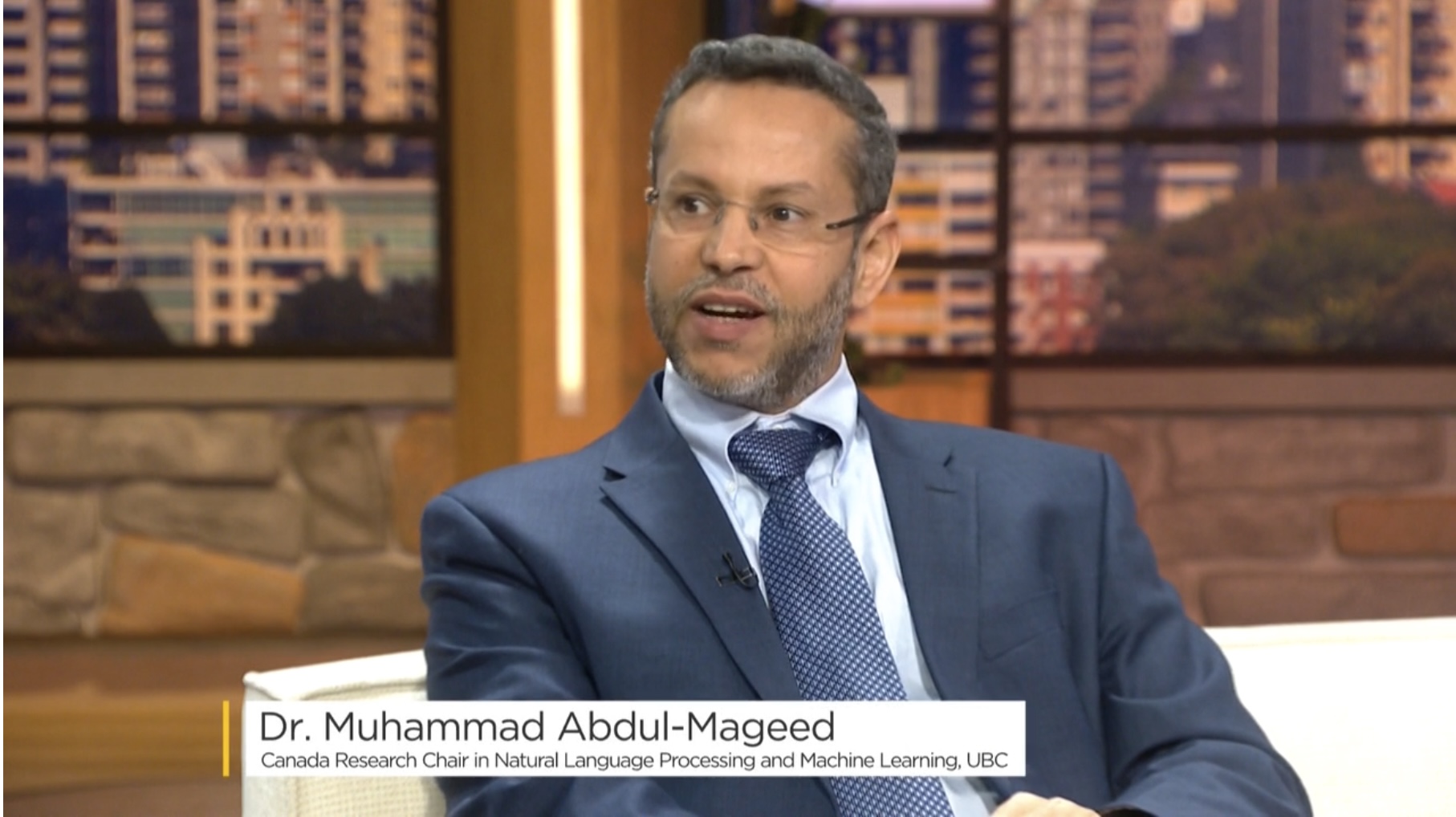
09:30 Muhammad Abdul Mageed, University of British
Columbia
Socially embedded AI – The NLP Lab at UBC
10:00 Darra Hoffman, San Jose State University
AI and Access To Public Records
10:30 Tracey Lauriault, Carleton University
Digital Twins: Preserving the parts and not the whole
11:00 Jessica Bushey, San José State University
Trust through Transparency in the Generative AI Era
11:30 Emanuele Frontoni, University of Macerata
Perganet: Accessing the Middle Ages with AI
12:00 Questions
12:15 Break for lunch
14:15 Peter Sullivan, University of British Columbia
AI for the UNESCO Radio Archives
14:45 Scott Cameron, Bank of Canada
Paradata for AI Accountability
15:15 Pierluigi Feliciati
Access to Archives in the Age of AI
15:45 Victoria Lemieux, University of British Columbia
Clio X
16:15 Hrvoje Stančić, University of Zagreb
Blockchain and AI: A Perfect Match
16:45 Questions & Wrap Up
17:00 Adjourn